
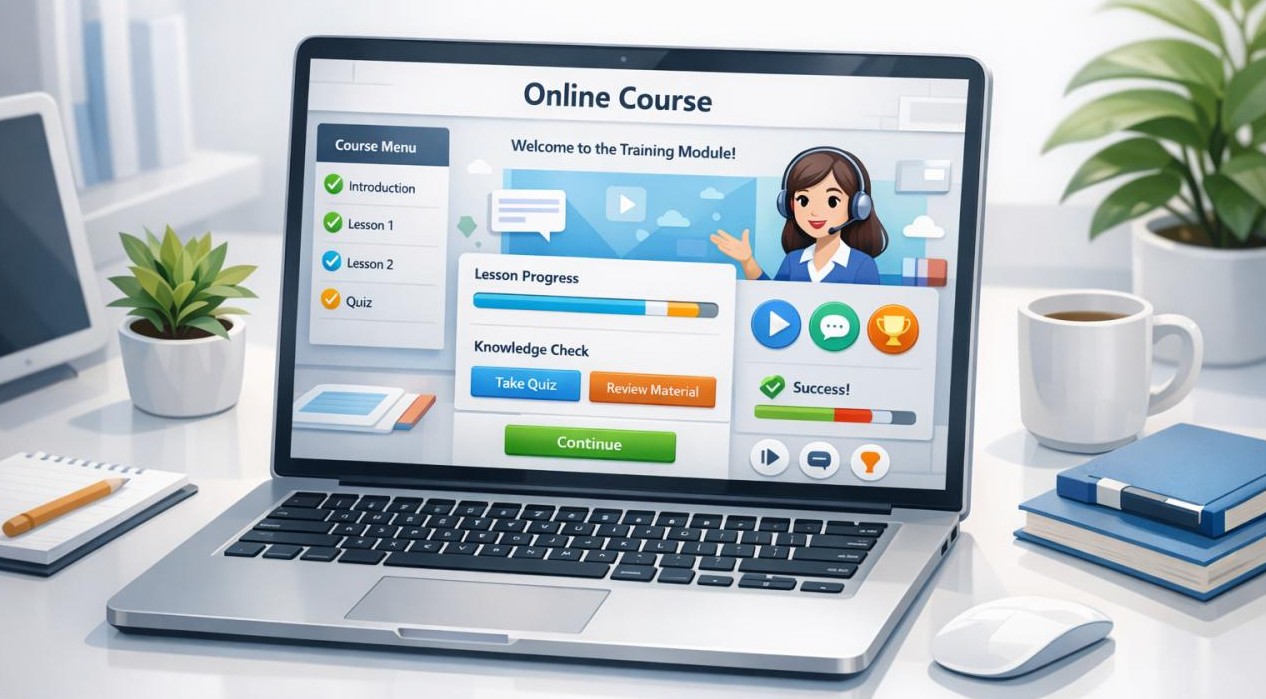
Creating an online course is not just about recording videos and uploading them to a website. A successful course should help students understand a subject, practise new skills, and achieve a clear learning outcome.
Many online courses attract students initially but struggle to keep them engaged. Poor lesson structure, lengthy videos, unclear instructions, and a lack of practical activities can make students lose interest.
If you want to build an effective online course, you need a clear plan.
1. Define Your Learning Objectives
Start by deciding what students should be able to do after completing your course.
For example, instead of creating a general course called “Digital Marketing,” define specific outcomes:
- Create and manage a Facebook Business Page.
- Understand basic SEO principles.
- Develop a social media content plan.
- Set up and analyse an advertising campaign.
Clear objectives help you design relevant lessons and assessments.
2. Understand Your Target Students
Before preparing lessons, identify who your students are.
Consider their current knowledge, learning goals, language preferences, available devices, and internet access.
A course for beginners should explain concepts differently from a course designed for experienced professionals.
Understanding your audience helps you choose the right teaching methods.
3. Divide the Course into Small Modules
Avoid presenting everything in one long lesson.
Organize your course into modules, and divide each module into manageable lessons.
For example:
Course: WordPress Website Development
- Module 1: Introduction to WordPress
- Module 2: Domain and Hosting
- Module 3: WordPress Installation
- Module 4: Themes and Plugins
- Module 5: Elementor Website Design
- Module 6: Website Security and Maintenance
- Module 7: Final Practical Project
This structure makes the learning journey easier to follow.
4. Create Engaging Video Lessons
Video lessons should focus on one main topic at a time.
Use screen recordings, demonstrations, examples, and simple explanations. For technical subjects, show the actual process instead of only describing it.
Keep lessons focused. A short lesson with a clear objective is often easier to complete than a long recording containing several unrelated topics.
5. Include Practical Activities
Students learn more effectively when they apply what they have learned.
Add activities such as:
- Creating a sample project.
- Completing a practical assignment.
- Solving a real-world problem.
- Participating in a discussion.
- Submitting a completed task for review.
Practical work helps students build confidence and develop useful skills.
6. Add Quizzes and Assessments
Quizzes help students check their understanding.
You can use multiple-choice questions, short answers, assignments, and final projects.
Make sure assessments are connected to the learning objectives. Avoid testing students on information that was never explained in the course.
7. Provide Student Support
Students may face difficulties while learning online.
Provide clear instructions about how they can ask questions and receive help.
Depending on your platform, you can offer:
- Discussion forums.
- Instructor feedback.
- Live support sessions.
- Assignment reviews.
- Frequently asked questions.
Regular support can help students stay motivated.
8. Track Student Progress
A Learning Management System (LMS) can help instructors monitor student activity and course progress.
Useful features include lesson completion tracking, quiz results, assignment submissions, certificates, and student reports.
Review this information to identify lessons where students frequently stop or struggle.
9. Improve Your Course Using Feedback
Do not assume that your first course version will be perfect.
Ask students what they found useful, which lessons were difficult, and what should be improved.
Update outdated information, fix unclear instructions, and add practical examples where necessary.
Frequently Asked Questions
What makes an online course effective?
Clear objectives, structured lessons, practical activities, useful assessments, and student support make an online course more effective.
How long should an online course be?
There is no fixed duration. Course length should depend on the subject, learning objectives, and the time students need to practise.
Do I need an LMS to create an online course?
An LMS is not always essential, but it makes it easier to organize lessons, manage students, track progress, and provide assessments.
Should online courses include certificates?
Certificates can recognize course completion, but they should be supported by meaningful learning activities and assessments.
Final Thoughts
An effective online course should focus on student outcomes rather than simply the number of videos or lessons.
Start with clear learning objectives, organize your content into manageable modules, include practical activities, and provide regular support.
Most importantly, continue improving your course based on student feedback and performance.